
- Cost range is wide but knowable: Building an MVP in 30 days costs anywhere from $0–$500/month (DIY no-code) to $15,000–$60,000+ (agency), and your budget determines your build path before you touch a single tool.
- Validation before construction: Allocating the first two weeks to problem clarity and a smoke test — not coding — is what separates MVPs that find traction from the 67% that fail because nobody wanted the product.
- The happy path is the only path: In a 30-day sprint, you build one user journey, zero edge cases, and no admin panel. Scope discipline is the single biggest predictor of on-time delivery.
- Four build lanes exist: DIY no-code, AI-assisted solo, freelancer, and agency. Choosing the wrong lane for your budget and skill level is a common and avoidable mistake.
The price of going from idea to MVP in 30 days is one of the most searched — and least answered — questions in the startup world. Most guides tell you to «move fast and validate,» then leave you without a dollar figure or a day-by-day plan. This article fixes that. You will get a realistic, tiered pricing breakdown and a week-by-week execution roadmap in one place, so you can pick your budget lane and follow the matching path to a launched product by Day 30.
Whether you are a first-time founder with $500 and a Bubble account, or a seed-stage operator ready to hire a freelance team, the framework below applies. Let’s start with what an MVP actually is — because most people begin with the wrong definition and waste their first two weeks building the wrong thing.
How do you go from idea to MVP in 30 days?
Spend Week 1 locking your core problem and single feature. Use Week 2 to validate with a landing page before building. Build only the happy path in Week 3 using no-code tools or a freelancer. Launch to real users in Week 4. Budget ranges from $0–$500 (no-code DIY) to $15K+ (agency).
What «MVP in 30 Days» Actually Means (And What It Doesn’t)
Eric Ries, author of The Lean Startup, defined a minimum viable product as «that version of a new product which allows a team to collect the maximum amount of validated learning about customers with the least effort.» Notice what that definition does not say: it does not say «a product with fewer features.» It says the smallest thing that generates validated learning.
That distinction matters enormously inside a 30-day window. Founders who treat an MVP as a stripped-down version of their full vision still try to build too much. Founders who treat it as a learning instrument ask one question and design only the features necessary to answer it.
A 30-day MVP is not a beta product. It is not a scalable platform. It is a time-boxed experiment with a clear hypothesis attached.
The One Question Your MVP Must Answer in 30 Days
Before you open Figma, Bubble, or any other tool, write this sentence on a blank page: «We believe [this user] has [this problem] and will [take this action] to solve it.» That is your hypothesis. Your MVP exists to confirm or deny it inside 30 days.
If you cannot complete that sentence in one paragraph, you are not ready to build. You are ready to do more customer discovery. Trying to skip this step is the most expensive mistake a 30-day sprint can make — not because the tools cost more, but because you will build the wrong thing and lose the entire month.
Write the hypothesis in a Notion doc. Share it with at least three people who would push back on it. Lock it before Day 7. Everything that follows flows from this single question.
MVP vs. PoC vs. Prototype: Which One Do You Actually Need?
This is the most common point of confusion at the pre-build stage, and it has a direct impact on cost. Here is a clean comparison:
| Term | Purpose | Audience | Output | Typical Cost |
|---|---|---|---|---|
| Proof of Concept (PoC) | Test technical feasibility | Internal team / investors | Working prototype of one function | $500–$5,000 |
| Prototype | Test UX and user flow | Target users | Clickable mockup (no backend) | $1,000–$8,000 |
| MVP | Test market demand with real use | Real paying or active users | Functional product, core journey only | $500–$60,000+ |
The PoC comes first if your core idea depends on a technical breakthrough — for example, a new AI model or a novel data integration. The prototype comes first if your biggest risk is usability. The MVP comes first when your biggest risk is demand: will real people use this and pay for it?
For most SaaS, marketplace, or tool-based ideas, the answer is to go straight to MVP. A 30-day sprint is not long enough to build a PoC and an MVP in sequence. Pick one, and pick it based on your riskiest assumption.
How Much Does It Cost to Build an MVP in 30 Days? (Tiered Pricing Breakdown)
This is the section most guides skip entirely. Cost depends on three variables: who builds it, what tools they use, and how complex the core journey is. Here is a four-tier breakdown that maps directly to the execution paths covered later in this guide.
| Tier | Who Builds It | Monthly Cost Range | Time to Launch | Skill Required |
|---|---|---|---|---|
| 1. DIY No-Code | Founder alone | $0–$500/month | 3–5 weeks | Low-medium |
| 2. AI-Assisted Solo | Founder + AI tools | $500–$2,000 total | 3–4 weeks | Medium (some coding comfort) |
| 3. Freelancer | 1–2 hired developers | $3,000–$15,000 total | 4–6 weeks | Low (PM skills needed) |
| 4. Agency | Full team | $15,000–$60,000+ | 6–10 weeks | Low (budget needed) |
According to Indian App Developers’ 2026 breakdown, a simple MVP — one to two user roles, zero to two integrations — costs between $8,000 and $25,000 when built by a developer, with a timeline of four to six weeks. That aligns with the freelancer tier above.
Three factors drive cost up the fastest: user authentication (login systems are expensive to build correctly), payment integration via Stripe, and third-party API connections. Remove any of these from your MVP scope and the cost drops significantly.
The No-Code MVP Budget: Tools, Subscriptions, and Hidden Costs
The no-code path is the most accessible for non-technical founders. The realistic monthly tool stack looks like this:
- Bubble (app builder): Free tier available; Starter plan at $29/month. Handles logic, database, and UI in one place.
- Webflow (website and CMS): Free to design; $14–$39/month to publish.
- Typeform (user intake and surveys): Free for up to 10 responses; $29/month for growth features.
- Stripe (payments): No monthly fee; 2.9% + $0.30 per transaction.
- Supabase (backend database): Generous free tier; $25/month for the Pro plan.
Total for a lean no-code stack: roughly $70–$120/month. Add a custom domain ($12/year) and a Loom account for async user feedback videos (free tier available), and you are well under $200/month.
The hidden costs to watch: Bubble’s per-seat pricing kicks in if you add collaborators. Webflow’s CMS plan limits the number of items on lower tiers. Typeform throttles response volume aggressively on free plans. Budget for the next tier up on whichever tool handles your core user action.
Hiring a Freelancer or Agency: What to Expect and How to Avoid Scope Creep
On Upwork, mid-level full-stack developers typically charge $35–$75/hour in Eastern Europe and Latin America, and $80–$150/hour in the US. A 30-day MVP at 40 hours per week puts the total at roughly $5,600–$12,000 for an offshore developer and $12,800–$24,000 for a US-based developer.
Toptal’s talent sits at the higher end — $100–$200/hour — but the vetting process is stricter. For a 30-day MVP, Toptal makes sense only if the technical complexity justifies the premium.
The 30-day deadline is actually your best weapon against scope creep. Use it. Write a fixed-scope contract that lists exactly which features are in scope and explicitly states that additions require a change order. According to UX Continuum’s CTO pricing guide, a clear discovery phase and milestone-based fixed-price contracts reduce cost overruns by roughly 30%.
Red flags when hiring: any developer who cannot define the «happy path» (the primary user journey from signup to value), any agency that quotes without a discovery call, and any contract that bills hourly without a scope ceiling.
Can ChatGPT Build Your MVP? The AI-Assisted Path (and Its Real Limits)
The direct answer to «Can ChatGPT create an MVP?» is: yes for logic, copy, and code generation — no for production-grade deployment on its own. ChatGPT does not deploy apps, manage databases, or handle authentication. What it does is dramatically compress the time a solo technical founder spends on boilerplate code.
A realistic AI-assisted stack for a solo founder with some coding comfort:
- ChatGPT — generate component logic, API integration code, and user copy
- Cursor — AI-native code editor that applies ChatGPT suggestions directly in your codebase
- Vercel — deploy front-end instantly with zero DevOps knowledge; free tier covers MVP traffic easily
- Supabase — managed Postgres database with built-in auth; free tier handles early users
Total cost for this stack: $20–$40/month for Cursor, free tiers for Vercel and Supabase, and $20/month for ChatGPT Plus. The real cost is time. This path requires a founder who is comfortable reading and debugging code even if they did not write it from scratch. If that describes you, the AI-assisted path can produce a working MVP for under $200 in tool costs.
The 30-Day MVP Sprint Plan: Week-by-Week Execution Roadmap
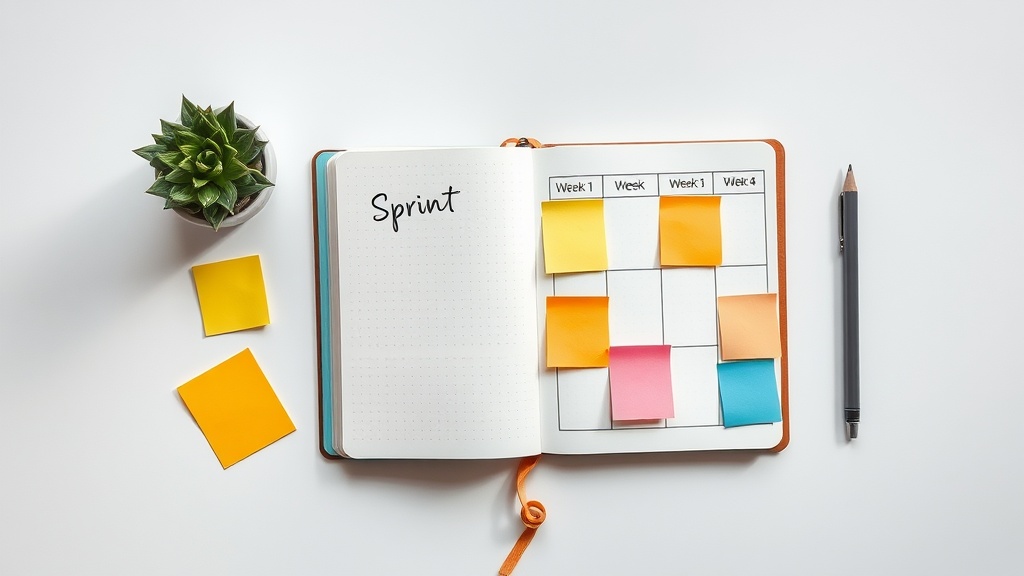
The sprint plan below is designed around the Y Combinator principle: build something a small number of people love, not something a large number of people sort of like. Each week has one primary output and a clear gate that must be passed before the next week starts.
Week 1 (Days 1–7): Problem Clarity, User Definition, and Scope Lock
Day 1–2: Write your hypothesis sentence (described above). Define your ideal customer profile (ICP) — one specific user type, not a broad demographic. «Busy professionals» is not an ICP. «Independent consultants billing under $10K/month who track time manually in spreadsheets» is an ICP.
Day 3–4: List every feature you want to build. Then cross off everything that does not directly test your hypothesis. You should be left with one to three features. If you have more than three, keep cutting.
Day 5–6: Document the happy path in a Notion doc. One paragraph per step: user lands, user signs up, user completes core action, user receives value. No branching logic yet.
Day 7: Scope freeze. No new features enter the plan after today. Announce this rule publicly to your team, co-founder, or accountability partner. The temptation to add «just one more thing» in Week 3 kills more 30-day MVPs than technical problems do.
Week 2 (Days 8–14): Design the Flow, Validate Before You Build
Days 8–10: Build lo-fi wireframes in Figma. You do not need a Figma subscription — the free tier handles MVP wireframing. Focus on the three to five screens that represent your happy path. Do not design edge cases, error states, or settings pages at this stage.
Days 11–12: Launch a validation landing page. Use Webflow or a simple Typeform to describe the product and capture email signups or pre-orders. This is a «smoke test» — you are checking whether real users respond before you build the real thing. If you get zero signups from your target audience after 48 hours of outreach, that is a signal worth examining before committing Week 3 to building.

Days 13–14: Conduct a minimum of five user interviews. Walk each person through your Figma prototype using a Loom recording if they cannot meet live. Ask what they would expect the product to do, not whether they like it. Incorporate one to two insights into your scope doc — but do not reopen the feature list.
Pre-selling — asking users to pay before the product is built — is the strongest validation signal available. Even five people paying $29 for early access proves more than 500 email signups.
Week 3 (Days 15–21): Build the Happy Path Only — Nothing Else
Choose your build lane based on the pricing tier you selected earlier. No-code founders open Bubble or Webflow and start with the signup flow. AI-assisted founders open Cursor and begin with the core data model. Founders who hired a freelancer hand off the Figma wireframes and Notion scope doc on Day 15 and schedule daily async check-ins via Loom.
The rule for this entire week is the happy path principle: you build the single journey from first touch to first value. Nothing else. No admin dashboard. No user profile settings. No notification system. No «nice to have» analytics page.
Every time you feel the urge to add something, ask: «Does a user need this to experience the core value?» If the answer is no, it goes on the backlog. A physical sticky note that says «HAPPY PATH ONLY» on your monitor is not a joke — it works.
By Day 21, you should have a working product that a real user can open, complete the core action, and receive the core value without your help.
Week 4 (Days 22–30): Launch to Real Users, Collect Signal, Decide Next
Day 22: Define your success signal before you launch. Not «a lot of users liked it.» Something measurable: 20 users complete the core action, three users pay, or one user returns on Day 2 without a prompt. Write this down before a single user touches the product.
Days 23–25: Soft launch to 20–50 real users from your target ICP. Recruit from your Week 2 email list, your network, or relevant online communities. Do not launch to a general audience yet. You need quality signal, not volume.
Days 26–28: Collect qualitative feedback through five-minute user calls or a Typeform survey. Collect quantitative data through whatever analytics you have wired in (even basic Vercel analytics or a simple Supabase query). Look for patterns, not individual opinions.
Days 29–30: The decision gate. Compare your results to the success signal you defined on Day 22. Three outcomes are possible: iterate (the core idea is right but execution needs adjustment), pivot (the hypothesis was wrong; a new one has emerged), or proceed (the signal is strong enough to begin building the next layer). All three are valid. The worst outcome is ambiguity — which usually means you did not define your success signal clearly enough at the start.
The Minimal Tool Stack for a 30-Day MVP (By Budget Tier)
| Category | Free / Low-Cost Tool | Pro Tool |
|---|---|---|
| Design | Figma (free tier) | Figma Professional ($12/mo) |
| Build (No-Code) | Bubble (free tier) | Webflow ($39/mo) |
| Build (Code) | Vercel (free tier) | Cursor + Vercel Pro ($40/mo) |
| Database / Auth | Supabase (free tier) | Supabase Pro ($25/mo) |
| Payments | Stripe (transaction fee only) | Stripe (same, no monthly fee) |
| User Intake | Typeform (free tier) | Typeform Growth ($29/mo) |
| User Feedback | Loom (free tier) | Loom Business ($12.50/mo) |
| Project Mgmt | Notion (free tier) | Notion Plus ($10/mo) |
| AI Assistance | ChatGPT (free tier) | ChatGPT Plus ($20/mo) |
For the DIY no-code founder, the free tier of Bubble plus Stripe and a free Supabase account covers the core build. Total cost: under $50/month. For the AI-assisted founder, add ChatGPT Plus and Cursor ($40/month combined) to the above stack. For the freelancer tier, this same tool stack is what you should specify in the contract — it keeps the developer’s environment predictable and your costs auditable.
The 5 Mistakes That Kill a 30-Day MVP (And How to Avoid Each One)
Most 30-day MVP guides end at Week 3. They skip the launch phase entirely — which is exactly where the most expensive mistakes happen. Here are the five failure modes that consistently derail this sprint, and how to sidestep each one.
1. Building before validating. According to Softermii’s 2025 MVP development guide, 67% of early startup failures happen because the team built a product nobody wanted. The smoke test in Week 2 is not optional. A landing page with zero signups after 48 hours of outreach is the cheapest lesson you will ever receive.
2. Targeting the wrong user. An ICP that is too broad («small business owners») produces feedback that points in ten directions. You cannot build for ten directions in 30 days. If your Week 1 ICP definition takes less than three specific descriptors, narrow it further before Day 7.

3. Over-engineering the stack. Founders with technical backgrounds regularly spend Week 3 setting up CI/CD pipelines, automated testing, and scalable infrastructure for a product that has zero users. According to ZTABS startup statistics, technical debt taken for speed becomes a top scaling pain point later — but only if you have users to scale to. Ship the happy path first.
4. Ignoring pricing until after launch. If your MVP has no pricing mechanism — even a simple Stripe payment link — you cannot test willingness to pay, which is the most important signal a 30-day sprint can generate. Wire Stripe in during Week 3, even if you plan to offer a free trial. The architecture should support payment from Day 1.
5. Launching to zero audience. A soft launch to 20–50 warm users (people who signed up in Week 2 or who you recruited from your network) generates 10 times more useful signal than a Product Hunt launch to strangers. Build the audience before the product, not after. Your Week 2 email capture is not a nice-to-have — it is the launch list.
Frequently Asked Questions About MVP Pricing and the 30-Day Build
How much does it cost to go from idea to MVP in 30 days?
Cost depends on your build path. A DIY no-code approach using tools like Bubble, Webflow, and Supabase runs $0–$500/month in subscriptions. An AI-assisted solo build costs $500–$2,000 in total tool and labor expenses. Hiring a freelancer typically runs $3,000–$15,000 for a 30-day scope. An agency starts around $15,000 and can reach $60,000 or more depending on complexity. According to Indian App Developers, a simple MVP built by a developer costs $8,000–$25,000 over four to six weeks.
Can a non-technical founder build an MVP in 30 days without hiring a developer?
Yes, using no-code platforms. Bubble handles complex app logic without code. Webflow builds polished front-ends. Typeform captures user input. Stripe processes payments. Supabase manages the database. A non-technical founder with 20–30 hours per week available can realistically launch a working no-code MVP inside 30 days if the scope is tightly constrained to one core user journey. The critical constraint is scope, not skill level.
Can ChatGPT or AI tools build a functional MVP?
ChatGPT can generate code, write user copy, design data models, and produce API integration logic. It cannot deploy apps, manage databases, or handle authentication on its own. A realistic AI-assisted stack combines ChatGPT with Cursor (AI code editor), Vercel (deployment), and Supabase (database and auth). This path requires a founder comfortable reading and debugging code. Total tool cost is under $100/month, but the time investment is comparable to a traditional solo build.
Which comes first — an MVP or a proof of concept?
A proof of concept (PoC) comes first when your core idea depends on unproven technical feasibility — for example, a novel AI model or an unusual hardware integration. A PoC tests whether the technology works. An MVP tests whether the market wants it. For most software startups, demand is the riskiest assumption, not technical feasibility, so the MVP comes first. A 30-day sprint is not long enough to build both in sequence. Choose based on your riskiest assumption.
What is the difference between an MVP and an MMP (Minimum Marketable Product)?
An MVP is the smallest thing that tests your core hypothesis with real users — it may not be polished enough to market publicly. An MMP (Minimum Marketable Product) is the smallest version of the product you would feel comfortable promoting to a broad audience, with enough polish and reliability to retain early customers. The MVP comes first. The MMP is the next iteration after the MVP generates positive signal. In a 30-day sprint, you are building an MVP, not an MMP.
How do I know if my MVP is «done enough» to launch?
Your MVP is ready to launch when a real user can complete the core journey — from first touch to first value — without your help, your explanation, or your intervention. If you need to be present to walk someone through it, it is not done. It does not need to handle errors gracefully, support multiple user types, or look pixel-perfect. It needs to work for one person doing one thing. That is the launch threshold.
What’s the biggest reason 30-day MVP sprints fail?
Scope creep in Week 3 is the most common operational killer. But the deeper root cause is launching without a pre-defined success signal. Teams that do not decide — before Day 22 — what «good» looks like tend to interpret ambiguous results as permission to keep building. This creates an endless loop of minor iterations with no decision gate. Define your success metric on Day 1. Write it down. Evaluate against it on Day 30. Then make a decision.
Conclusion: Your 30-Day MVP Starts With One Decision
Going from idea to MVP in 30 days is not a matter of working harder — it is a matter of deciding earlier. Decide your hypothesis in Week 1. Decide your build path based on your actual budget, not the path you wish you could afford. Decide your success signal before a single user touches the product. The sprint plan, the tool stack, and the pricing tiers in this guide are all execution tools. They only work if the foundational decisions are made with honesty and speed.
The problem is not lack of ambition — it is lack of an operating path. Knowing the cost of each build lane and having a week-by-week roadmap removes the two most common reasons founders stall: uncertainty about money and uncertainty about what to do next. If you want a clearer picture of where your specific idea stands — what the real risks are, which build path fits your situation, and what a realistic 30-day scope looks like for your hypothesis — the next step is a structured diagnostic. Take your free 5-minute Venture Diagnosis.
Your MVP is live. Now the question changes from «what do I build?» to «what do I work on next?» That’s where most founders stall. What Should a Founder Focus On Next? A Framework for Finding Your One Bottleneck walks through exactly how to decide what comes after launch.